In the realm of Edo-period Japan, where the city of Edo was a tapestry woven from the threads of fire and human resilience, there emerged a unique garment that encapsulated the spirit of the times: the hikeshi banten, or fireman’s jacket. These jackets were not mere protective attire; they were vessels of cultural expression, embodying the essence of bravery and the reverence for heroic figures.
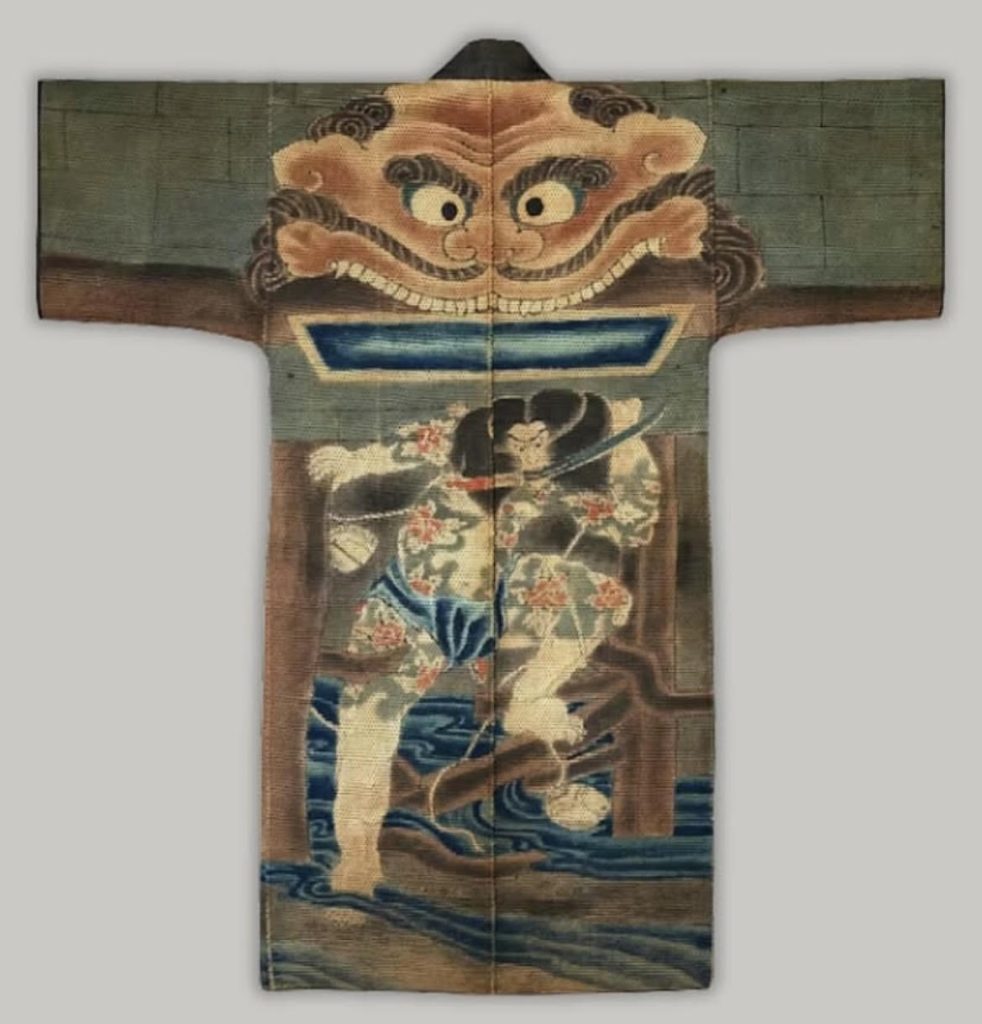
The hikeshi banten was a masterpiece of craftsmanship, designed to serve dual purposes. On the exterior, it bore the name of the firefighting brigade, a simple yet powerful identifier in the chaos of a burning city. Yet, it was the interior that truly captured the imagination. Hidden beneath the plain exterior lay a world of intricate designs, each telling a story of valor and mythological prowess.
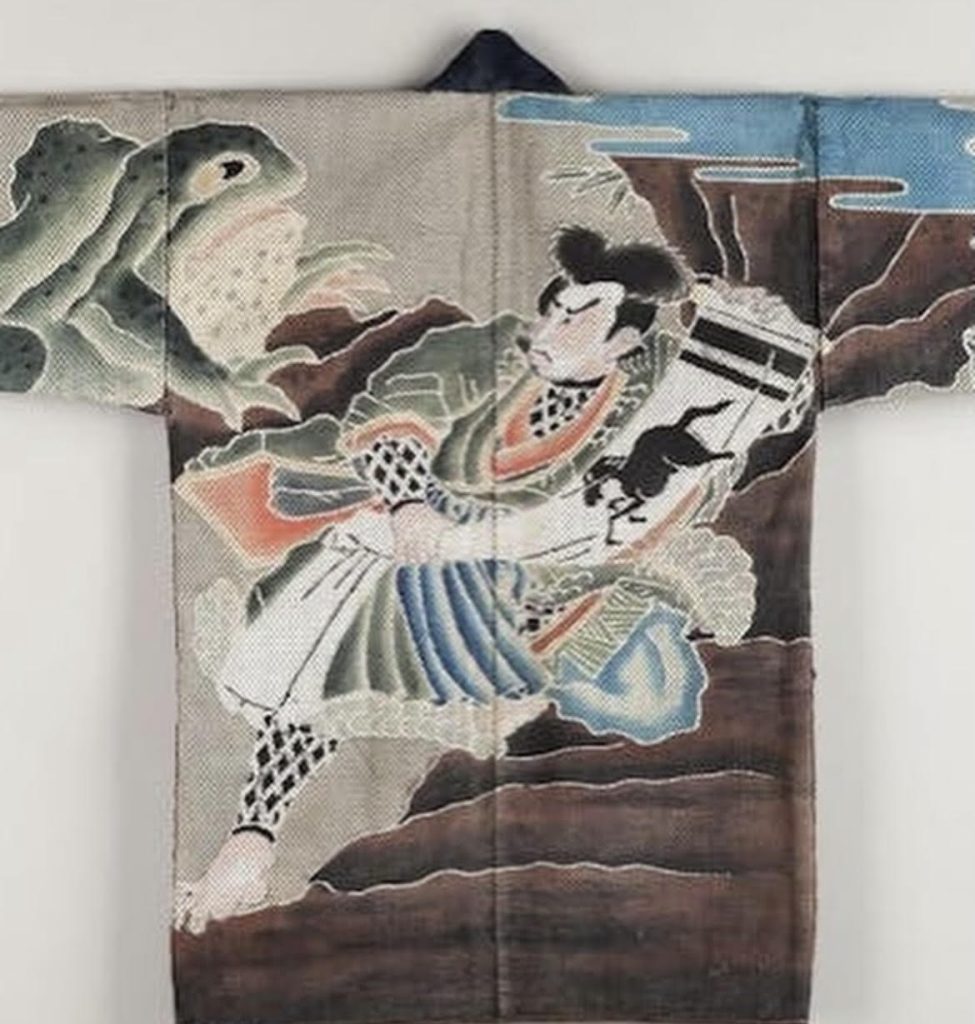
These jackets were constructed with layers of tightly stitched cotton fabric, quilted using the sashiko technique—a method of running stitches that not only reinforced the fabric but also added a decorative element. The inner designs were often created using the tsutsugaki resist-dyeing method, resulting in vivid and detailed imagery that would remain concealed until the moment of triumph. When the fire was quelled, the jackets were reversed, revealing the inner artwork to the awe-struck onlookers [3].
The themes depicted on these jackets were rich and varied, drawing inspiration from the pantheon of Japanese folklore and warrior tales. Scenes of legendary heroes such as Musashibo Benkei battling colossal carp, or Kato Kiyomasa playfully engaging with a mischievous tiger, adorned the interiors. These narratives were not merely decorative; they served as a psychological shield for the firefighters, imbuing them with the courage and resolve of the heroes they emulated [7][8].
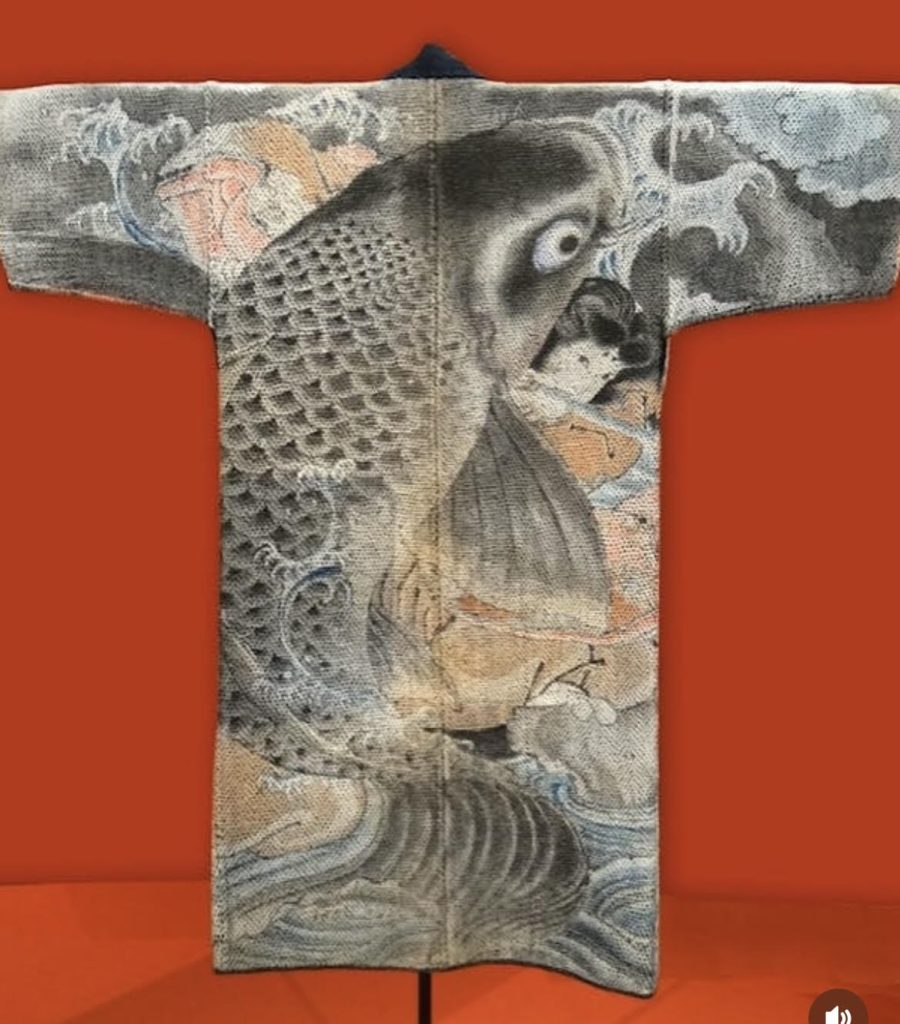
Moreover, the jackets often featured mythical creatures associated with water and bravery, such as dragons and toads, symbolizing the dual nature of the fireman’s role: to conquer the destructive force of fire with the protective power of water [7][8]. These motifs were deeply rooted in the cultural psyche of Edo, where the constant threat of fire was a reality of life, and the firemen were revered as guardians of the community [6].
Interestingly, the artwork found on the hikeshi banten shares striking similarities with traditional Japanese tattoo designs, known as irezumi. Both forms of art drew from the same wellspring of mythological and historical imagery, reflecting the deep cultural significance of these symbols. Just as tattoos were believed to provide spiritual protection and convey personal strength, the designs on the hikeshi banten served a similar purpose, offering a form of psychological armor to the firefighters [9].
The hikeshi, or Edo firemen, were often tattooed themselves, further emphasizing the connection between their physical and spiritual armor. These tattoos, like the designs on their jackets, were not merely decorative but were imbued with symbolic meaning. Dragons, tigers, and other mythical creatures were common motifs, symbolizing power, protection, and the ability to overcome adversity. The intricate patterns and bold lines characteristic of irezumi can be seen in the detailed embroidery and dyeing techniques used on the jackets, highlighting the interconnectedness of different artistic expressions within Edo-period culture [9].
The act of reversing the jackets after a successful firefight was more than just a practical gesture; it was a ritual of celebration. As the firefighters paraded through the streets, their jackets displayed the inner artwork, serving as a visual testament to their bravery and the community’s gratitude. This practice transformed the jackets into symbols of communal pride and resilience, reinforcing the bond between the firefighters and the people they protected [2][8].
In the grand tapestry of Edo culture, the hikeshi banten stands as a poignant reminder of the intertwining of artistry and heroism. These jackets were not just garments; they were carriers of stories, symbols of the indomitable spirit of the Edo period, and testaments to the enduring legacy of those who fought the fires of adversity [3][7][8].
In the words of Alan Watts, “To live fully is to live dangerously, and to live dangerously is to embrace the unknown with the courage of a thousand heroes.” The hikeshi banten embodies this philosophy, reminding us that true bravery lies not in the absence of fear, but in the ability to face it with the strength of myth and the heart of a warrior.
References:
- [3] – “Edo Firemen: The Hikeshi and Their Equipment” by Stephen Turnbull.
- [6] – “Firefighting in Edo” by Mark Ravina.
- [7] – “The Art of the Japanese Fireman” by John Stevenson.
- [8] – “Myth and Symbol in Japanese Art” by Patricia J. Graham.
- [9] – “Irezumi: The Art of Japanese Tattoo” by Kip Fulbeck.