Shrines move through old streets
Hidden stories breathe in cloth
Asakusa waits
*A haiku is a traditional Japanese poem, usually written in three short lines.
It captures a small moment in nature, but often leaves behind a much deeper feeling.
Sanja Matsuri is one of those things you have to feel in person to really understand.
It takes place in Asakusa, one of the old historic districts of Tokyo, and for me that already gives it a certain weight before the festival even begins. Asakusa has always had that older feeling to it, the temples, the narrow streets, the old shops, the crafts, the food, the people, it still carries that sense of Edo culture that you can feel when you walk around.
It is an area closely tied to traditional crafts, and I have always loved that about it. You can be surrounded by crowds and signs and noise, but underneath all of that there is still this older world of makers, woodwork, lanterns, textiles, ceramics, theatre, food and religious tradition. It is not frozen in the past, but the past is still there, woven into the place.
Asakusa is also an important area in the world of Traditional Japanese tattooing, with a strong concentration of horishi, tattoo masters, connected to the district. Heavy hitters such as Horikazu II, Horiyasu and Horicho II, to name a few, are all part of that wider Asakusa world, and that adds another layer to the place for anyone interested in Horimono and Irezumi.
That is why Sanja Matsuri feels so powerful.
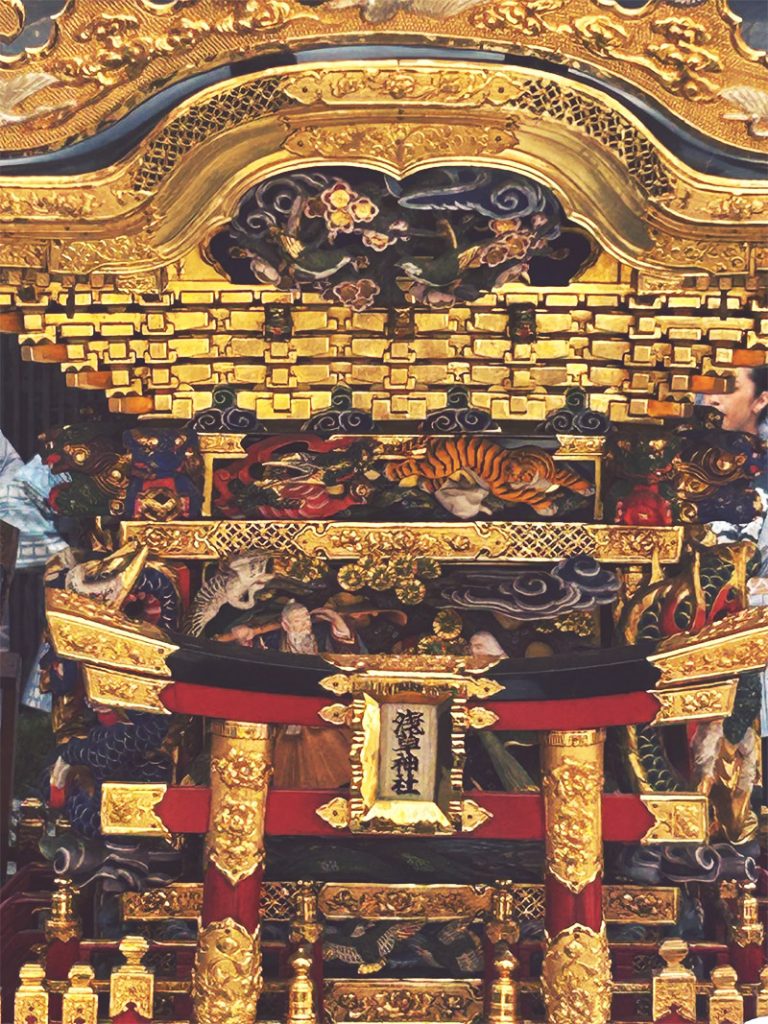
At its heart, it is a religious festival, centred around Asakusa Shrine and the local community. The mikoshi, the portable shrines, are carried through the streets, and the whole area changes. It becomes loud, crowded, physical and full of energy, but there is still something deeply traditional underneath it all. It is not just a parade for people to watch, it belongs to the district, to the shrine, to the people carrying it, and to the families and groups who have been part of it for a long time.
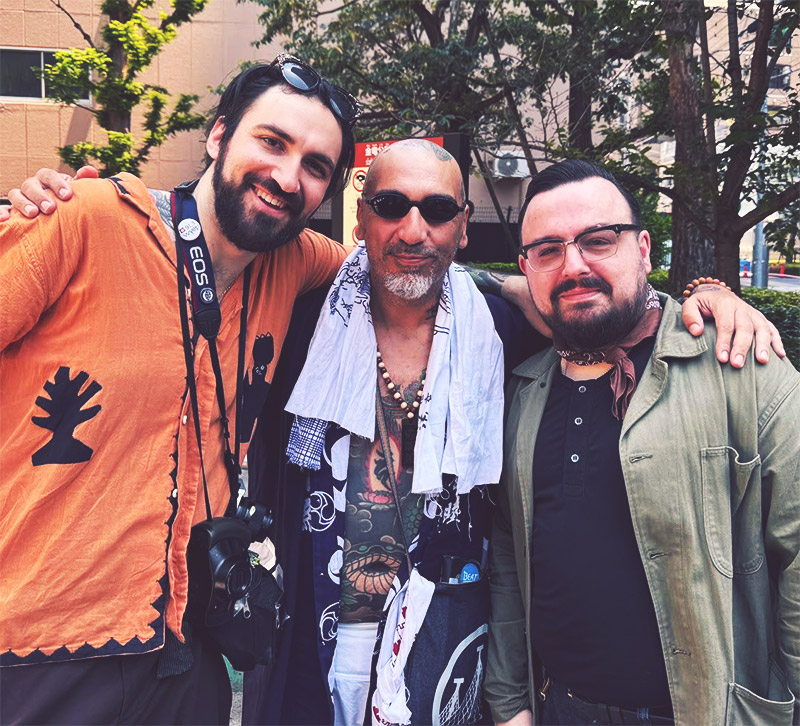
I went with personal friends of mine, Alex Reinke, also known as Horikitsune, from Holy Fox Tattoos in London, Melina Villaverde from Love Hate Tattoo in London, and Jess Scutella from Kyklops Tattoo in Pittsburgh, USA, all three of them tattooists, and it was one of those days where you are aware you are seeing something very special, but also something that has to be treated with respect.
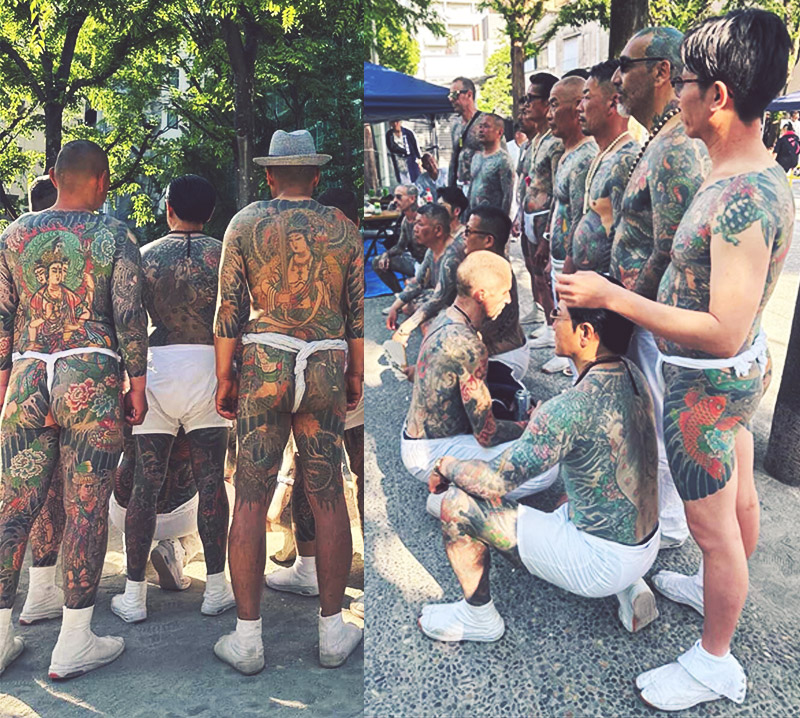
For people interested in Horimono, Irezumi and Traditional Japanese tattooing, Sanja Matsuri has had another side to it for a long time. It has been one of the rare public moments where people connected to that world, including yakuza, would show their traditional body work openly during the festival. In Japan, that carries a very different meaning to how people might see tattooing in the West, and you have to be respectful of that.
This year felt different though.
From what I understood while I was there, this was sadly the first year where showing tattoos in the parade had been banned. There has been more pressure and more of a crack down around yakuza visibility, and because Sanja Matsuri has always been one of the days where they could show themselves a little, it felt like the government wanted to stop that being part of the public face of the festival.
I understand why it is complicated, but it was still sad to see that part of the tradition being pushed away.
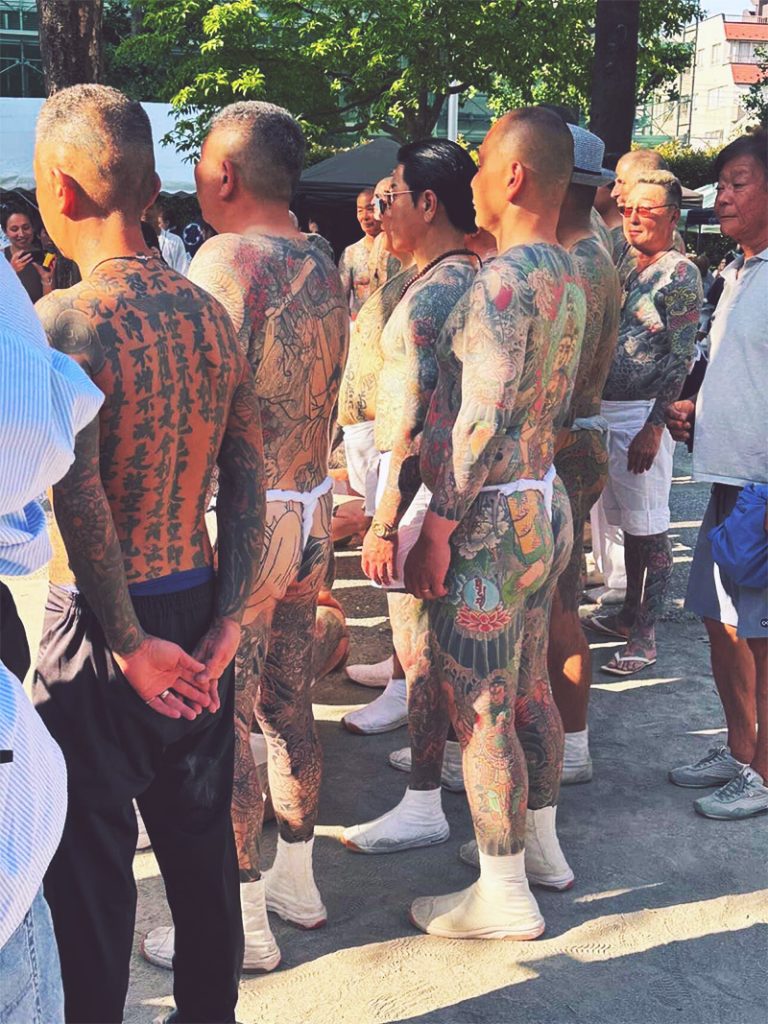
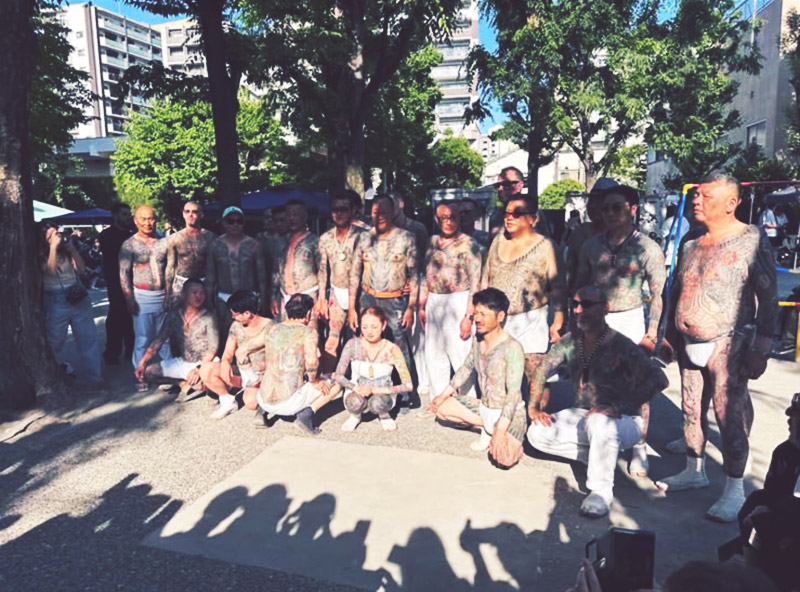
I did manage to get some photos in the park, away from the main crowds, where some of them had stopped for a break. It was much quieter there, and it felt more respectful than trying to force my way into something in the middle of the parade.
Most of the people I photographed there were customers of Horikazu II, and in this case, from what I understood, most were yakuza, so I was very aware of where I was and what I was looking at. I did not speak to any of them directly, because I knew this was their event, not mine, and I did not want to treat it like some kind of spectacle.
That matters to me.
I was there as a visitor, as a Master tattooist, and as someone trying to keep learning from the source, but I was not there to take over the space or make it about me. I did speak to members of the Horikazu tattoo family, and that felt like the right way to be around it, with respect, quietly, and without pushing too far.
There is a part of me that worries about the future of it.
If too many foreign tattooists and visitors keep coming just to photograph that side of Sanja Matsuri, it could become a problem. These traditions are already under pressure, and when something becomes too much of a tourist attraction, it can change the atmosphere very quickly. I would hate to see that happen, because there is a huge difference between witnessing something respectfully and turning it into something people consume.
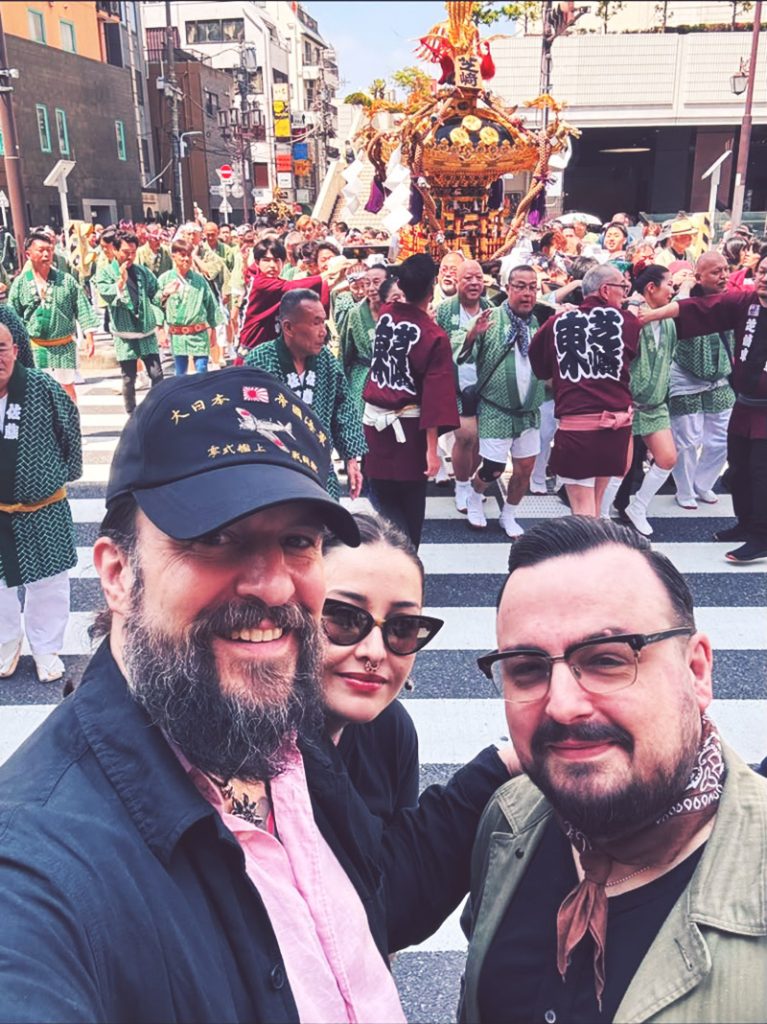
For me, the day was not just about seeing Traditional Japanese tattooing in public, it was about seeing how it sits inside a wider culture.
Asakusa, the shrine, the mikoshi, the crafts, the old streets, the families, the festival clothing, the food, the sound of it all, and then this quieter world of Horimono and Irezumi that has its own history and its own rules. It all sits together, but not in a simple way.
That is what I keep finding in Japan.
Nothing is ever just one thing.
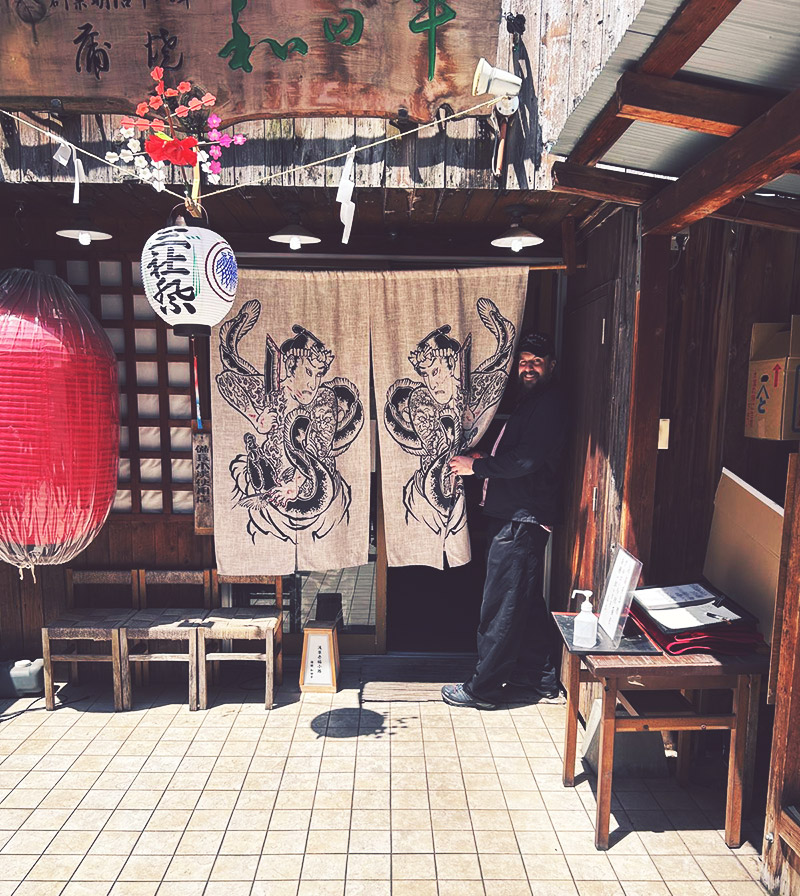
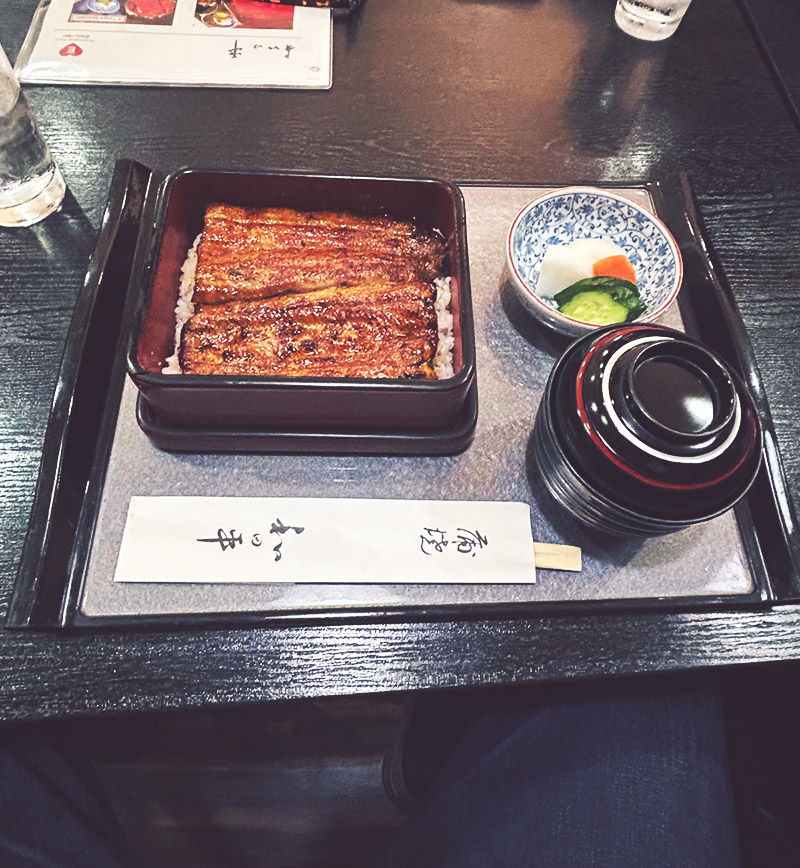
The day ended at a fifth generation unagi eel restaurant, which felt like the right kind of place to finish. Outside was a curtain with artwork by Horikazu, and again, there was that connection between food, family, craft, tradition and tattooing. It was not forced, it was just there.
Those are the moments that stay with me.
Not just the big crowds or the noise of the festival, but the small details around it, the people taking a break in the park, the old restaurant curtain, the feeling of being in Asakusa with friends, and the reminder that Traditional Japanese tattooing does not exist on its own. It comes from a much larger world of history, discipline, religion, craft and community.
There is also a difference in how tattooing is often understood in the West compared with Horimono.
In the West, people often get tattooed to show their individual identity, to say something about themselves, their taste, their story, or how they want to be seen. But within Horimono, especially in that older world, it can be about belonging to a group as much as standing apart as an individual. Certain yakuza syndicates would share the same tattoo master, going to the same horishi, carrying that connection through the work on their bodies.
That changes the meaning completely.
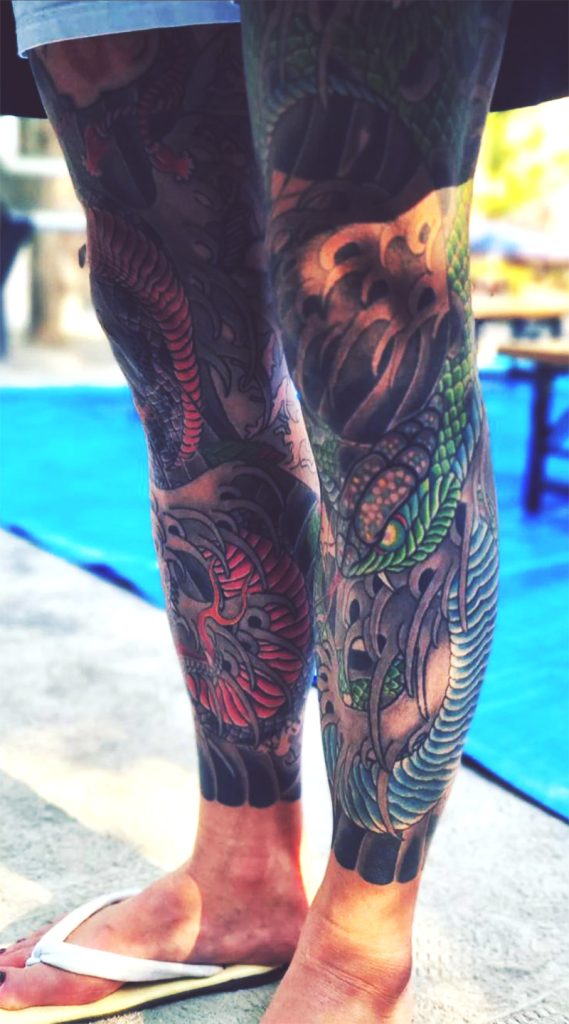
A full body suit is not a casual thing. It is a rite of passage, and in that world it shows commitment. It means you have chosen a path that separates you from normal society, because carrying that work can affect your place in ordinary life, your work, your future and the way people see you. It shows strength of character, but it also shows that you have committed yourself fully.
You choose this life and if you are going to work with that tradition properly, I think you have to understand that.
Or at least keep trying to.
Chris.